If you own a property with a septic tank, you probably already know that septic tank regulations can feel confusing at times. Many people are unsure what the current regulations actually require, especially when it comes to where the system can discharge, how often it should be maintained, and what paperwork is needed.
With more rural homes relying on private drainage, a clear and up to date explanation is often hard to find. This 2026 guide sets out the essentials in simple terms, so you can understand what the regulations cover, who they apply to, and what you should do to make sure your system is compliant.
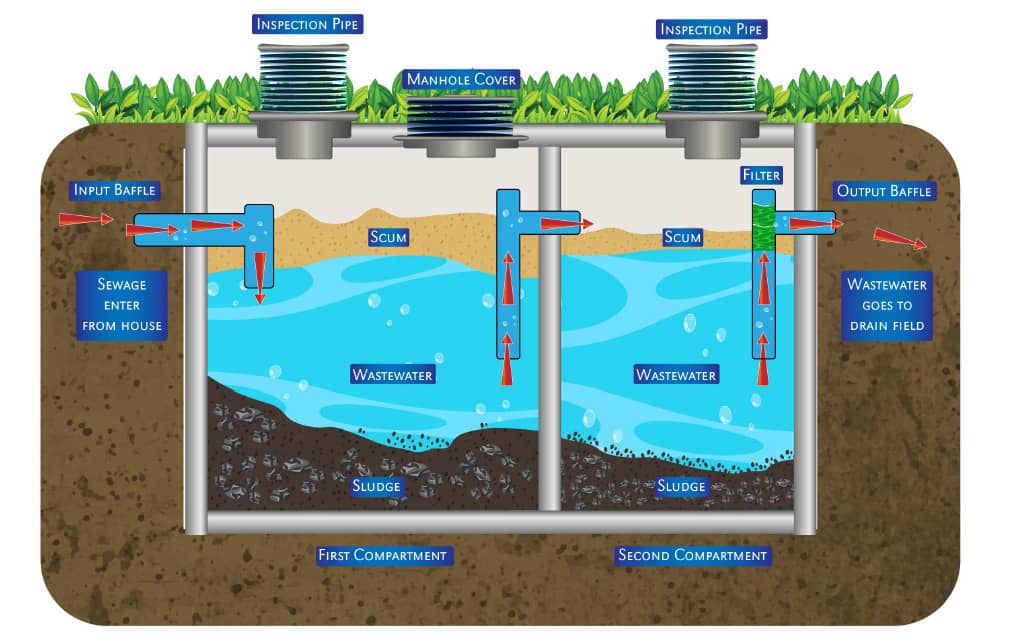
Private drainage in England is governed by the General Binding Rules as set by the Environment Agency. These rules apply to properties that are not connected to the mains sewer network and they outline how small sewage systems must be operated and maintained.
The regulations cover several key points. They set limits on where septic tanks can discharge. They explain how often systems are expected to be serviced. They also make clear that systems must not pollute groundwater, surface water or surrounding land.
A central part of the rules remains the ban on septic tanks that discharge directly into surface water. This includes ditches, streams, rivers and canals. Any system that still uses this method must be upgraded so that it discharges to a compliant drainage field or be replaced with a modern treatment plant.
Scotland and Northern Ireland have broadly similar rules, but they do have differences. If you own a rural property outside England, it is worth checking the relevant regulator guidance as part of staying compliant with septic tank regulations.
The core rules have not changed from the 2023 changes. What matters in 2026 is that property owners understand how the regulations are applied and what evidence they may be asked for.
Homeowners are increasingly expected to show that their system meets the General Binding Rules. This often includes proof of regular emptying, records of inspections and confirmation of where the system discharges. These records are becoming more important during property sales where missing information can slow down or complicate a transaction. Having paperwork ready is one of the simplest ways to avoid delays linked to septic tank regulations.
The Environment Agency guidance makes it clear that systems should be inspected once a year. Tanks should be emptied every three to five years depending on size and household use. Drainage fields should also be checked to ensure they are draining correctly and not becoming saturated.
These expectations help demonstrate that the system is being maintained responsibly and that it is not putting the environment at risk. Regular upkeep also helps identify problems early, such as cracks, blockages or drainage field failure, which can be far more costly if left untreated.
Many rural properties still rely on older septic tanks, including brick built and pre 2000 systems. While these are not automatically non compliant, they often struggle to meet modern performance expectations. Older tanks may require a new drainage field, internal repairs or replacement with a treatment plant if the outflow quality is poor. The focus in 2026 is on whether the system is functioning correctly rather than simply its age, but older systems are more likely to raise issues under septic tank regulations.
Several groups need to pay close attention to the septic tank regulations as they exist in 2026.
Anyone with a private drainage system should understand the General Binding Rules and ensure their system meets the standards. This is especially important for owners of older or undocumented systems and for those who do not know where their tank discharges.
Septic tanks are now a routine part of property surveys. If a system is non compliant, it can delay the sale or lead to renegotiation of the price. Buyers are often advised to request inspection records and details of any upgrades. Sellers benefit from preparing this information in advance, as it reduces the risk of last minute complications related to septic tank regulations.
Landlords have a legal obligation to ensure their drainage system is safe, functional and compliant. They may also be asked to provide maintenance records during tenancy checks or in response to environmental complaints.
Larger systems used on farms and smallholdings are often under greater strain. These systems need regular inspection to prevent pollution, particularly where livestock, slurry pits or open watercourses are nearby.
In practice, agricultural properties often benefit from more frequent checks to ensure they remain compliant with septic tank regulations and do not create environmental risks.
To ensure compliance with the 2026 guidance, property owners should take several practical steps.
A qualified drainage specialist should carry out a thorough assessment of the system. This usually includes a CCTV survey, a check of the tank structure and a review of the drainage field.
An inspection helps identify any issues and provides evidence of responsible maintenance. It is also one of the clearest ways to demonstrate compliance with septic tank regulations during a property sale.
If your septic tank still discharges to surface water or if your drainage field is failing, you must take action. This could involve installing a compliant drainage field or upgrading to a modern sewage treatment plant. An engineer can advise on which option is most suitable.
You should keep all records related to emptying, servicing, inspections and upgrades. These documents are extremely useful during property sales and can also help resolve any compliance queries from neighbours or local authorities.
Good records also make it easier to show that you have taken septic tank regulations seriously and have maintained your system responsibly.
Common early indicators of a problem include slow draining fixtures, foul smells, wet patches over the drainage field and gurgling noises in the pipework.
Dealing with issues early prevents more serious failures and reduces the risk of environmental harm. It also reduces the likelihood of enforcement action if your system is found to be non compliant under septic tank regulations.
Drain Division provides professional septic tank inspections, compliance checks and upgrade advice for homeowners, buyers, sellers and landlords across the UK. Our engineers carry out detailed assessments of your system, including the tank, pipework and drainage field, and we supply clear written reports. These reports help confirm whether your system meets septic tank regulations and highlight any issues that need addressing.
Whether you need a routine check, a pre purchase inspection or guidance on bringing an older system up to standard, our team delivers accurate findings and practical solutions. With fast response times, nationwide coverage and transparent pricing, we are trusted by property owners who want reliable support and complete peace of mind.
Book a compliance check with Drain Division to confirm that your septic tank meets current UK regulations and to receive expert advice on any improvements that may be required.
Speak to a drainage expert today for tailored guidance on inspections, upgrades or pre purchase surveys. Our team is available seven days a week and ready to help on 0800 170 0265.
Contact our team of experts today. Our offices are open 6am to midnight 7 days a week.