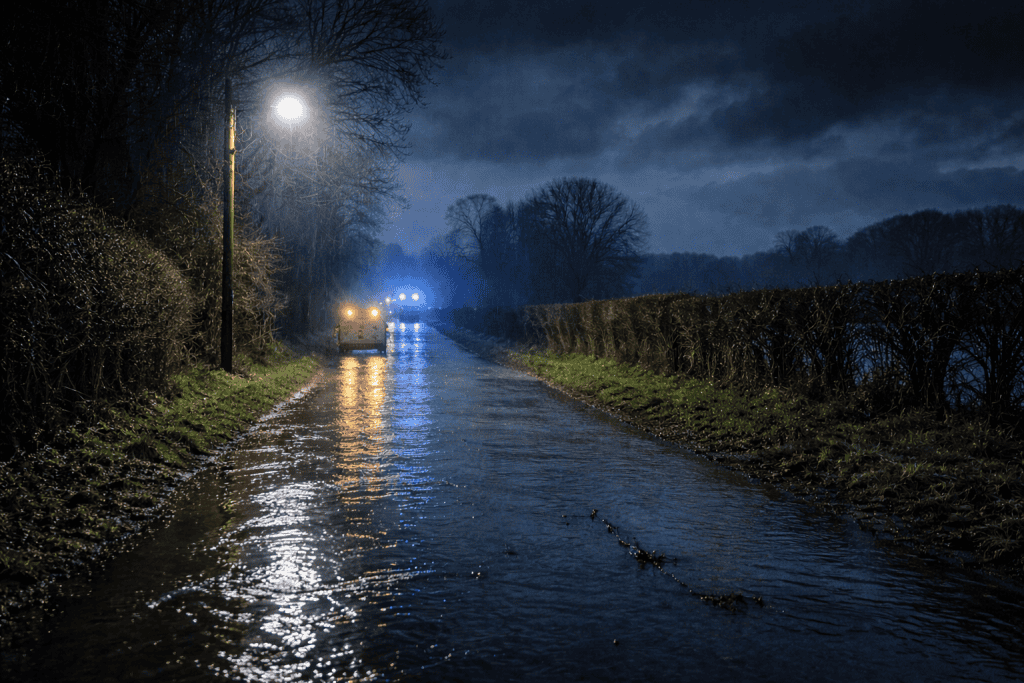
In early 2026, prolonged heavy rainfall led to flooding across parts of southern England and beyond, with locations such as Cornwall, Devon, Somerset and Worcestershire particularly affected. When ground stays saturated for weeks, drainage systems can be overwhelmed, and in some cases, damaged.
Locations referenced in recent reporting include Cornwall, Devon, Somerset and Worcestershire, with river catchments such as the Avon Valley (including the Amesbury to Salisbury stretch) also highlighted as areas at risk. When weather patterns stay wet for weeks, drains do not just get overwhelmed. They also become more vulnerable to hidden damage.
That is why a post-flood CCTV drain survey can be one of the most useful checks you can arrange after a flooding event, even if everything appears to be working again on the surface.
A CCTV drain survey is a professional inspection of your drainage system using a high-resolution camera. The camera is fed through the pipework from an access point such as an inspection chamber, manhole or rodding eye.
As it moves through the drains, it records the internal condition of the pipework. This makes it possible to identify problems that cannot be seen from ground level, without needing to dig up your driveway, garden or paving.
A post-flood CCTV drain survey is simply a CCTV inspection carried out after flooding or heavy rainfall, when the risk of debris build-up and pipe movement is higher.
Flooding and prolonged rainfall put unusual stress on drains. Even if your drains were fine before, post-flood issues can develop quickly.
When water levels rise, floodwater often carries:
Once floodwater recedes, these materials can settle inside pipework, gullies, or chambers. This can create partial blockages that do not show up immediately, but cause slow drainage, repeated backups, or pooling water weeks later.
During prolonged rainfall, the ground becomes heavier and less stable. This can lead to:
This kind of damage is not always visible from above. You might only notice it once you start getting repeated blockages or foul smells.
Many properties still have older drainage systems that include:
Flood conditions can expose weak points that were previously coping, turning minor issues into recurring faults.
Not every property needs a survey after every downpour. However, if your area has experienced flooding or prolonged heavy rainfall, a post-flood CCTV drain survey is worth considering if any of the following apply.
If water reached your driveway, patio, air bricks, garage, or external gullies, it is a strong sign that the drainage system was under pressure. Even if water drained away, a CCTV survey can confirm whether debris has been pulled into the drains.
If sinks, showers, toilets or external gullies are draining more slowly than usual after a flood event, it may indicate partial blockage, silt build-up, or pipe damage.
Smells and gurgling can indicate trapped waste, poor ventilation, or a blockage forming further down the line.
If you are unblocking the same drain more than once, especially after heavy rainfall, a CCTV survey is usually the quickest way to identify the underlying cause.
Flooding and drainage are now common concerns during property sales. A post-flood CCTV drain survey can provide peace of mind and a clear record of the drain condition.
Often, yes. Floodwater can leave behind silt and debris that settles slowly over time. A CCTV survey helps confirm whether the pipework is genuinely clear and structurally sound, rather than waiting for symptoms to appear later.
In most cases, once floodwater has fully receded and access points are safe to open. If your drains are already slow, gurgling or producing smells, it is usually better to arrange a survey sooner rather than later.
A CCTV survey can identify blockages, silt build-up, root ingress, cracked pipes, displaced joints, deformation, standing water caused by poor gradients, and early signs of collapse.
It can. A CCTV drain survey provides recorded evidence of the drain condition, which may support an insurance claim if flooding, sewage backing up, or pipe damage has occurred. Whether it is accepted depends on the policy, but it is often useful documentation to have.
No. In most cases it is non-invasive and carried out through existing access points, meaning there is usually no need for excavation or disruption to gardens, driveways or paving.
If your area has experienced flooding or prolonged heavy rainfall and you want to check your drains properly, contact Drain Division to arrange a CCTV drain survey.
If you are seeing slow drainage, gurgling, foul smells or repeat blockages since the flooding, we can inspect your drains and provide clear findings on what is happening below ground.
Contact our team of experts today. Our offices are open 6am to midnight 7 days a week.